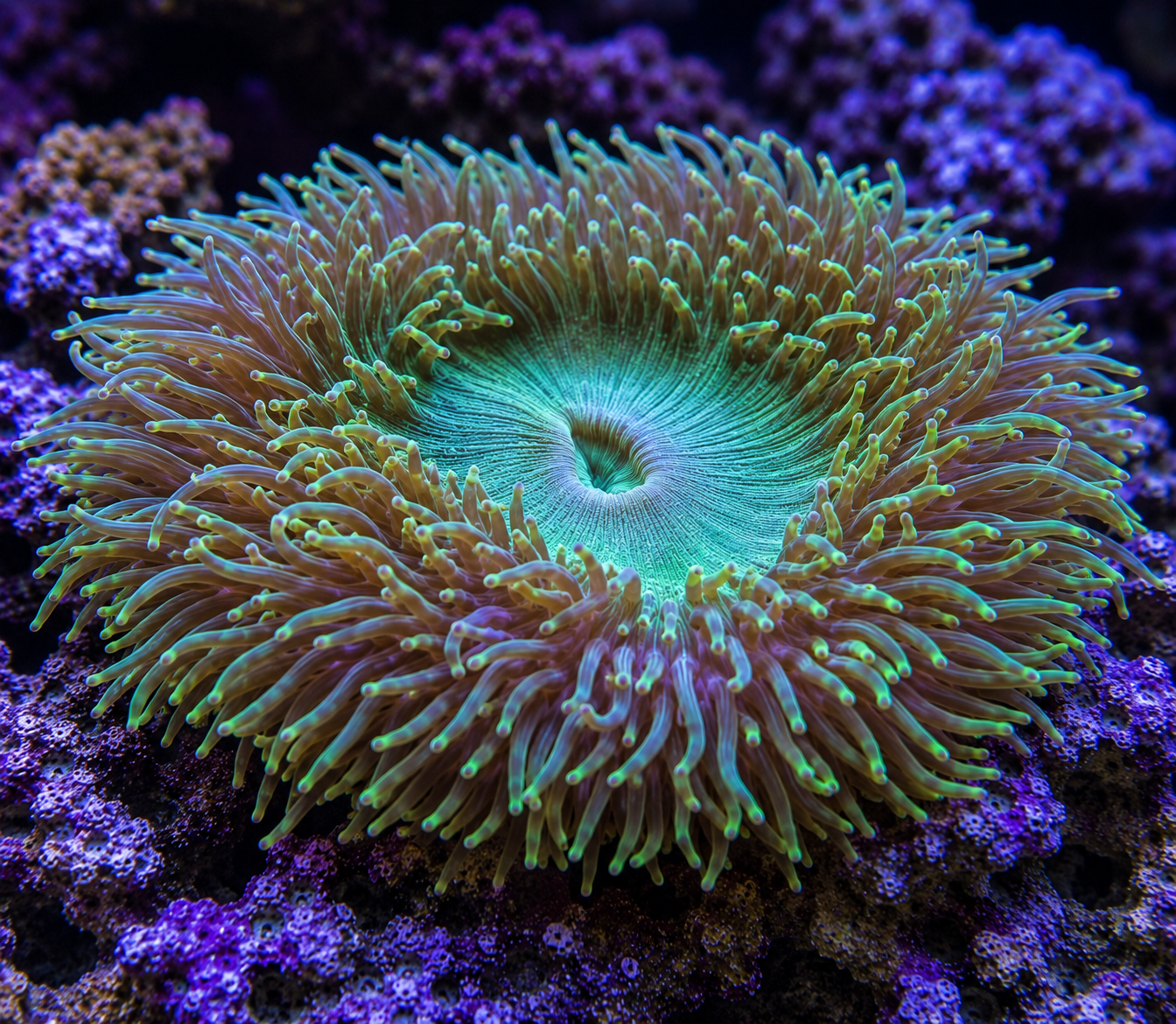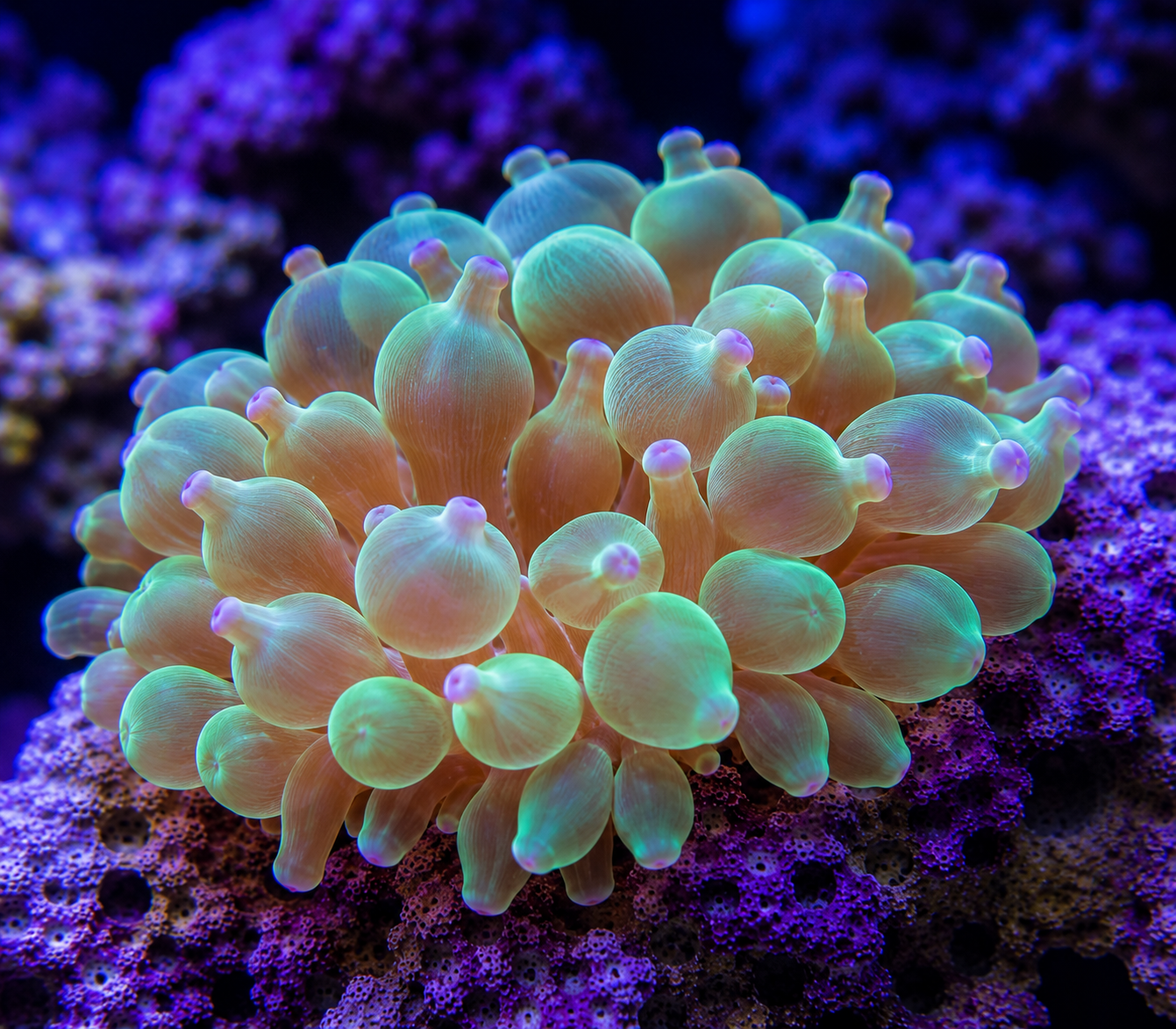
Overview
A Maxi-Mini Carpet Anemone is basically the "small but mighty" version of a carpet anemone: colorful, sticky, dramatic-looking, and absolutely capable of grabbing things you did not intend it to grab.
If you want an anemone that looks like a living alien flower, stays relatively small, and often plants itself nicely in a sandy nook, this is a great candidate. But here is the tradeoff: it is still a carpet anemone in behavior, which means it is built to trap and eat passing prey.
In a home aquarium, that translates to real risk for small fish, small shrimp, and anything unlucky enough to touch it. The right mindset is simple: as an anemone it is manageable, but as a predator it deserves respect.
Quick Care Snapshot
- Difficulty: Intermediate
- Minimum tank size: 10-20 gallons
- Tank maturity: 3-6+ months recommended
- Lighting: Moderate to high
- Flow: Low to moderate, indirect
- Placement: Sandy pocket near rock where the foot can anchor
- Feeding: Small meaty foods 1-2 times per week
- Reef safe: With caution
- Special risk: predation on small fish and shrimp, plus pump danger during settling
Natural Background
In nature, maxi-minis live in shallow reef areas where they can anchor into sand or rubble near rock. They are ambush predators that sit in place and wait for prey to make a mistake.
They also host symbiotic algae, which is why they appreciate light, but they are not purely light-driven animals. They respond very well to real feeding, and that combination of photosynthesis plus predation is why they can be both hardy and dangerous.
Tank Requirements
They are more forgiving than some large host anemones, but they still punish instability.
Good long-term conditions usually mean:
- steady salinity and temperature
- no major alkalinity swings
- moderate nutrients rather than sterile water
- moderate-to-high light with sensible acclimation
- low-to-moderate indirect flow
- a sandbed pocket or shallow cup where the foot can grab securely
The placement trick is giving them a home base. Bare flat rock with nowhere to attach often leads to movement or chronic irritation.
Feeding
Maxi-minis often have an aggressive feeding response.
Good food options include:
- tiny pieces of shrimp, scallop, or fish
- small frozen marine blends
- other small meaty marine foods
A strong baseline is 1x per week for maintenance or 2x per week if the animal is digesting well and the system can handle it.
The biggest warning is compatibility: this same feeding response that makes them satisfying to keep is what makes them capable of eating tiny tankmates.
Compatibility
Compatibility is mostly about what can touch it.
- corals need spacing because it stings by contact
- medium fish often learn to avoid it
- very small fish and shrimp are at real risk
- a newly introduced or weakened animal is more vulnerable than an established alert fish
This is not an anemone to buy casually for a nano full of tiny sandbed livestock.
Common Mistakes
- Treating it like a peaceful ornamental
It is beautiful, but it is still a predator.
- Putting it in an unstable tank
Salinity and temperature swings still matter.
- Overfeeding oversized chunks
Smaller meals are safer and easier to digest.
- Ignoring pump protection during the settling phase
Any roaming anemone plus exposed equipment is a bad combination.
- Assuming "reef safe" means safe for tiny livestock
This is where many keepers learn the wrong lesson the hard way.
Notes And Variations
If a maxi-mini moves after placement, it is usually looking for better footing, better flow, or better comfort. Once settled, many become very consistent.
Warning signs include:
- repeated failure to hold food
- staying collapsed for long periods
- loss of stickiness
- chronic movement from one bad spot to another
Final Thoughts
Maxi-mini carpet anemones are one of the best examples of reef beauty and predation living in the same body. Keep them in a stable tank, give them a sandy home base, feed them sensibly, and choose tankmates with intention, and they can be incredibly rewarding.
Treat them casually in a tank full of tiny fish or shrimp, and they may thrive while your livestock plan does not.